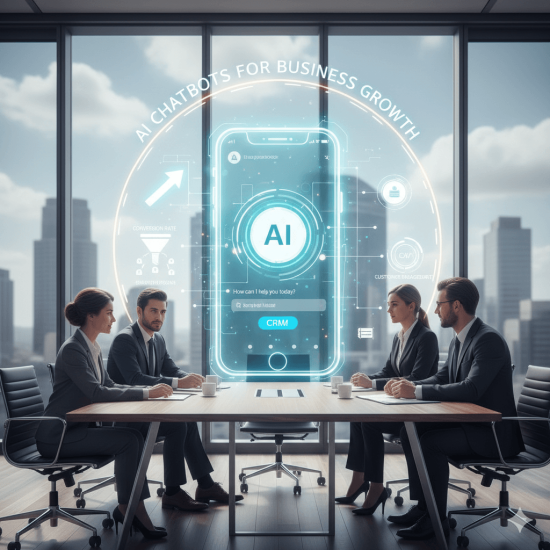
Modern customers expect instant answers. When they visit your website and can’t quickly find what they need, many leave — often heading straight to a competitor. This is where AI chatbots have become a powerful tool for business growth. Far from the clunky, scripted bots of the past, today’s AI chatbots can engage visitors naturally, answer questions, and guide them toward taking action.
One of the biggest advantages of AI chatbots is 24/7 availability. Unlike human teams, chatbots never log off. Whether a visitor lands on your site at noon or midnight, they can receive immediate assistance. For service-based businesses especially, after-hours inquiries often represent missed revenue. An AI chatbot ensures those opportunities are captured instead of lost.
Speed also plays a major role in conversions. Studies consistently show that faster response times increase the likelihood of a lead turning into a customer. AI chatbots provide instant responses, removing the frustration of waiting for an email reply or callback. Even simple interactions like directing users to the right service page or answering pricing-related questions can keep visitors engaged long enough to convert.
Another key benefit is lead qualification. Not every inquiry is equally valuable, and sales teams can waste hours responding to low-quality leads. AI chatbots can ask smart, pre-programmed questions such as budget range, project timeline, or type of service needed. Based on responses, the chatbot can categorize leads or route them to the right department. This means your team spends more time on serious prospects and less on unqualified inquiries.
AI chatbots also help reduce support workload. Many customer questions are repetitive: “What services do you offer?” “How long does a project take?” “How can I get a quote?” Automating these responses saves staff time while ensuring visitors get consistent, accurate information. This improves efficiency without sacrificing user experience.
Beyond conversation, chatbots collect valuable customer insight data. You can see what questions people ask most, which services generate the most interest, and where confusion occurs. This data helps refine your website messaging, marketing campaigns, and even service offerings. In this way, chatbots become not just support tools but sources of strategic business intelligence.
Modern AI chatbots also integrate with other business systems. They can connect with CRM platforms, email marketing tools, and scheduling software. For example, when a chatbot captures a lead, the information can automatically be added to your CRM and trigger a follow-up email sequence. This seamless automation shortens response times and improves lead nurturing.
Some business owners worry that chatbots feel impersonal. However, AI-driven systems now use natural language processing to create more human-like interactions. They can understand intent, respond conversationally, and even personalize messages based on user behavior. When designed correctly, chatbots enhance the user experience rather than replace human interaction.
Importantly, chatbots don’t eliminate the need for human support — they complement it. When conversations become complex or sensitive, the chatbot can transfer the user to a live representative with the full chat history included. This ensures customers receive the right level of care at the right time.
For businesses aiming to grow online, AI chatbots are no longer a futuristic luxury. They are practical tools that increase engagement, capture more leads, and improve operational efficiency. Companies that adopt them early gain a competitive edge by being more responsive, accessible, and data-driven.